
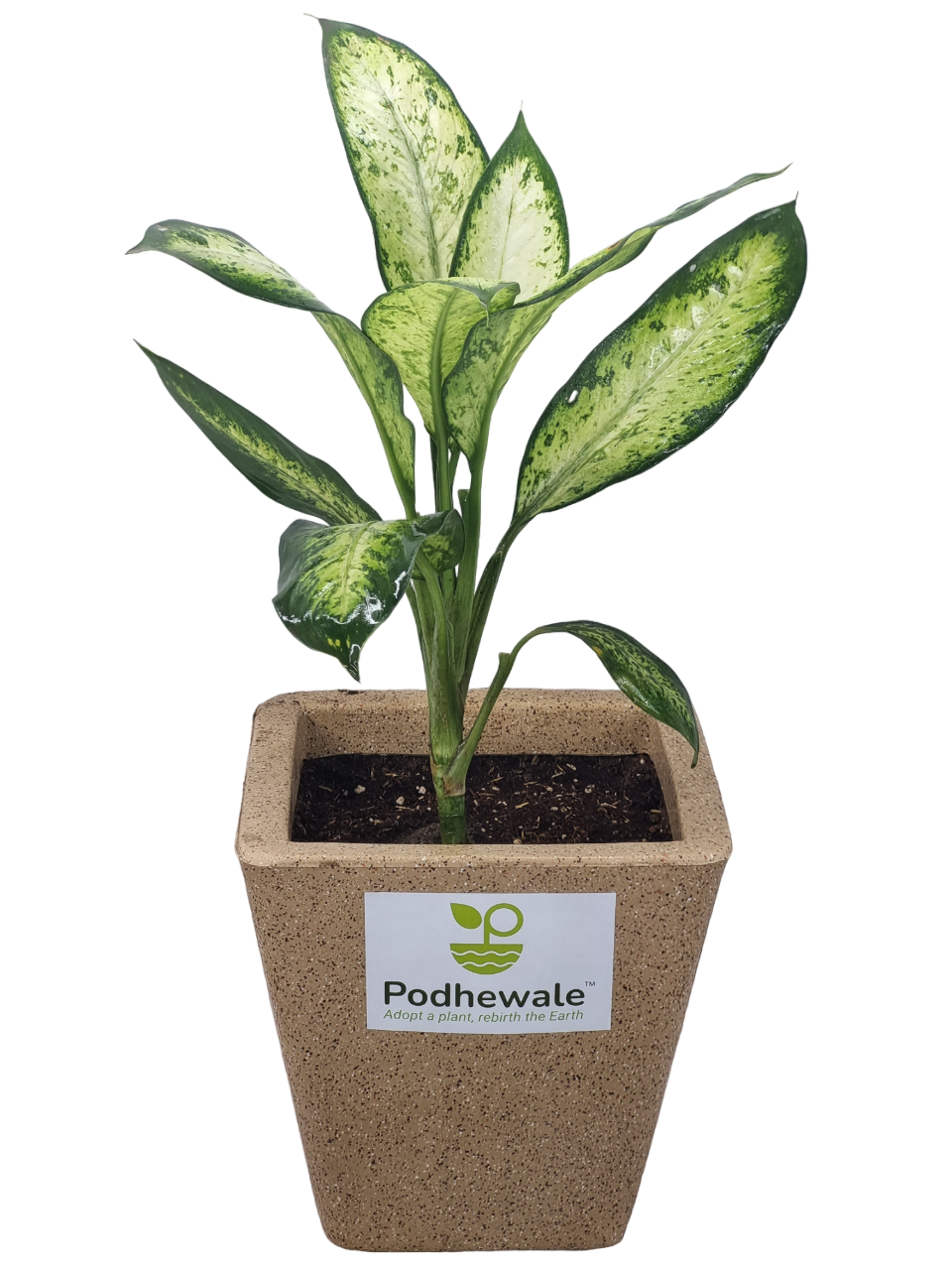
Dieffenbachia Seguine Care The main care requirements for your Dieffenbachia seguine are as follows: Position in bright but indirect light. Pot in a well-draining medium. Water to keep the soil lightly moist but not soggy. Provide higher-than-average humidity levels to get the best out of this plant. Fertilize sparingly monthly during the growing season. Light Dieffenbachia seguine does best in a spot where it receives bright, indirect light. This most closely mimics the filtered light on the rainforest floor of its native habitats. Some homeowners pick this plant for low-light locations, like bathrooms. While it does tolerate shadier spots, growth isn't as vigorous, and the variegation won't be as pronounced. Avoid full sun spots, as this can lead to leaf scorch, and rotate your plant regularly to promote even foliage growth. Soil A loamy potting soil is the dieffenbachia seguine’s preference. This provides a great balance of nutrients, aeration and moisture retention. However, it will do fine in most mixes, provided it is well-draining. Root rot can set in if the soil doesn’t drain quickly. Water The trickiest part of the dieffenbachia seguine’s care is getting it right with watering. Aim to keep the soil lightly moist but not soggy. Allow the top one inch of soil to dry out before rewatering—test with your finger rather than judging by sight. Water thoroughly, waiting for water to escape the pot's drainage holes, but then remove any standing water in the saucer. Letting the soil stay soggy quickly leads to root rot. The watering frequency depends on the plant size and your home conditions. You might water large plants as often as a couple of times a week during the growing season. In the winter, when growth slows, cut back on watering frequency. Temperature and Humidity Dieffenbachia seguine loves warm temperatures and high humidity, as you would expect from a tropical species. They can handle temperatures as low as 55°F but prefer temperatures of around 65 degrees to 75°F.2 Low or extreme temperature fluctuations and cold drafts can result in leaf drop, especially around the base of the plant. The dieffenbachia seguine is more tolerant of drier air than some tropical species. However, using a humidifier or sitting your plant in a pebble-filled water tray helps promote the healthiest growth when humidity levels are lower. Fertilizer Dieffenbachia seguine are fast-growers that appreciate regular feeding during the growing season. Applying an all-purpose, balanced liquid fertilizer diluted to half-strength to damp soil every month should be sufficient to promote lovely, glossy leaves. Pruning Your dieffenbachia seguine won’t need much pruning other than to remove any dying, damaged, or dead foliage or stems. Don’t panic if your mature plant starts dropping some leaves at the base of the stems. This is a natural part of aging, and the stems are chunky and striking. However, if you don’t want so much of the stems showing, prune them back to around 6 inches in length, and more foliage will grow below the cut line, producing a bushier form. You can also trim off the top of a tall, top-heavy plant when the base of the main stem is getting bare. This helps prevent the plant from falling over and encourages a more attractive form. Propagating Dieffenbachia Seguine As the growing season starts in the spring, it’s easy to propagate dieffenbachia seguine by stem cuttings or root division. Just be sure to use gloves, as the Dieffenbachia sap can cause discomfort if you have open cuts on your hands.


We want to give you 10% discount for your first order,
Use discount code at checkout
